Here’s something we’ve noticed working with clients across gold buying, home renovation, real estate, and ecommerce: almost none of them found Techbound through a Google search first. Most had already seen us somewhere, a post, a comment reply, a client’s tagged story before they ever typed anything into a search bar. That’s the quiet shift happening across every industry right now. People aren’t discovering brands through search alone anymore; they’re discovering them on Instagram, LinkedIn, and increasingly, through whatever an AI assistant pulls up when they ask a question.
So what does that mean for a business trying to actually grow, not just “be active” on social media? That’s what this guide gets into what social media marketing really covers, why it looks different heading into 2026, and how to build a strategy that does more than rack up likes nobody remembers by the next morning.
What Is Social Media Marketing?
At its core, social media marketing (SMM) means using platforms like Instagram, Facebook, LinkedIn, YouTube, and TikTok with the intention to build awareness, get people talking, and eventually turn that attention into leads, sales, or repeat customers. It spans organic content (your everyday posts, reels, stories), paid campaigns (ads and boosted posts), and the less flashy work of community management replying to comments, DMs, and reviews.
There’s a real difference between “posting on social media” and doing social media marketing. Anyone can post. Marketing means every piece of content is tied to something awareness, consideration, or a direct push toward conversion. If you can’t say why a post exists, it probably shouldn’t.
SMM vs. SEO: Two Channels, One Job
People tend to plan SEO and social media separately, almost like they compete for budget. In practice, they lean on each other. SEO catches someone the moment they’re actively searching for something. Social media does the earlier work building the familiarity that makes someone search for your brand by name instead of a generic term. And a genuinely active social presence quietly feeds SEO too, through brand searches, shares, and the kind of content that earns links without you having to chase them. If you’re trying to figure out where to put your first rupee, our full range of digital marketing services walks through how SEO and SMM are meant to work as one strategy, not two separate line items.
The Core Types of Social Media Marketing
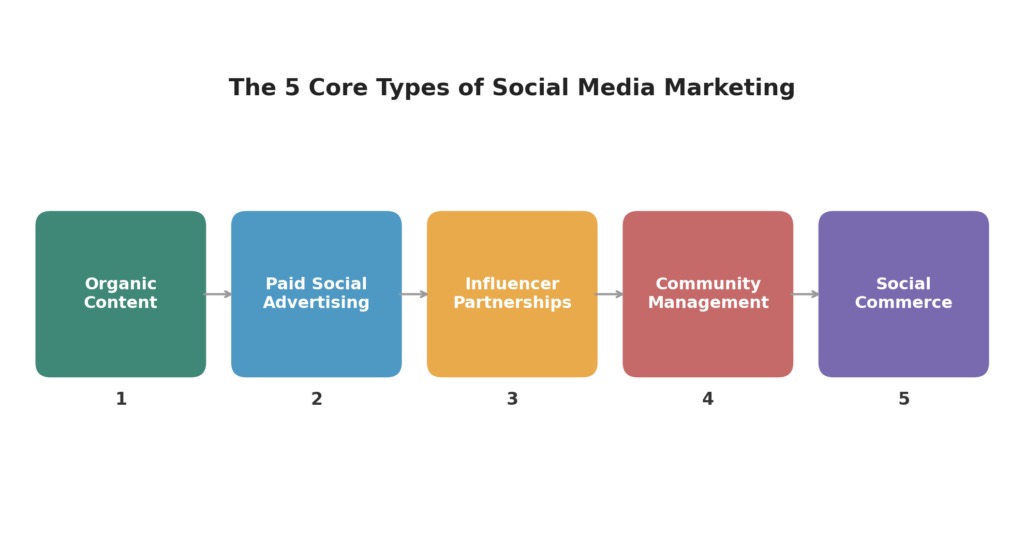
Organic content marketing. Your regular posts, reels, and stories are the stuff that doesn’t cost ad spend but builds the brand voice people start to recognize. This is slow, and that’s kind of the point. Trust doesn’t happen overnight.
Paid social advertising. Targeted campaigns on Meta Ads, LinkedIn Ads, and similar platforms, used when you need to reach beyond your current followers a new launch, a seasonal push, entering a market where nobody knows you yet.
Influencer and creator partnerships. Teaming up with creators who already have the audience you’re trying to reach. For local and regional businesses especially, one trusted local voice can outperform a polished ad ten times its size.
Community management. Answering comments, messages, and reviews as they come in, not days later. It’s the unglamorous side of SMM, and it’s also the part people judge you on most how you handle a public complaint says more than your best-designed post ever will.
Social commerce. Selling directly through features like Instagram Shop, shortening the gap between “I saw this” and “I bought this” to almost nothing.
Why Social Media Marketing Matters More Heading Into 2026
A few things are converging this year that make SMM harder to treat as an afterthought.
Social platforms are turning into search engines in their own right a growing number of people, especially younger audiences, check Instagram or TikTok before Google when they want a local recommendation or a product opinion. At the same time, the algorithms are rewarding relevance over raw follower counts, which is genuinely good news if you’re a smaller or newer account reach isn’t just bought anymore, it’s earned through how people actually engage with what you post. And then there’s the AI layer: as tools and AI Overviews start summarizing the web instead of just linking to it, brands with an active, well-connected social presence have a better shot at being the ones AI actually cites.
HubSpot’s 2026 State of Social Report backs this up. Brand awareness is still the single most common goal marketers name for social media, and most of them are already weaving AI into how they plan and produce content. Worth sitting with: the goals haven’t changed much, but almost everything about how teams get there has.
Building a Strategy That Actually Works
Start with one goal, not five. Awareness, leads, or sales pick the one that matters most right now and build around it, instead of trying to optimize for everything at once and ending up optimizing for nothing.
Know where your audience actually spends time. A gold buying business in Kerala and a coworking space in Kochi are not going after the same audience on the same platforms, and treating them the same way wastes budget on both ends.
Build a calendar you can sustain, not a backlog you’re proud of on paper. Three to four solid posts a week, kept up for months, will beat a week of daily posting that quietly dies out by week three and it almost always does.
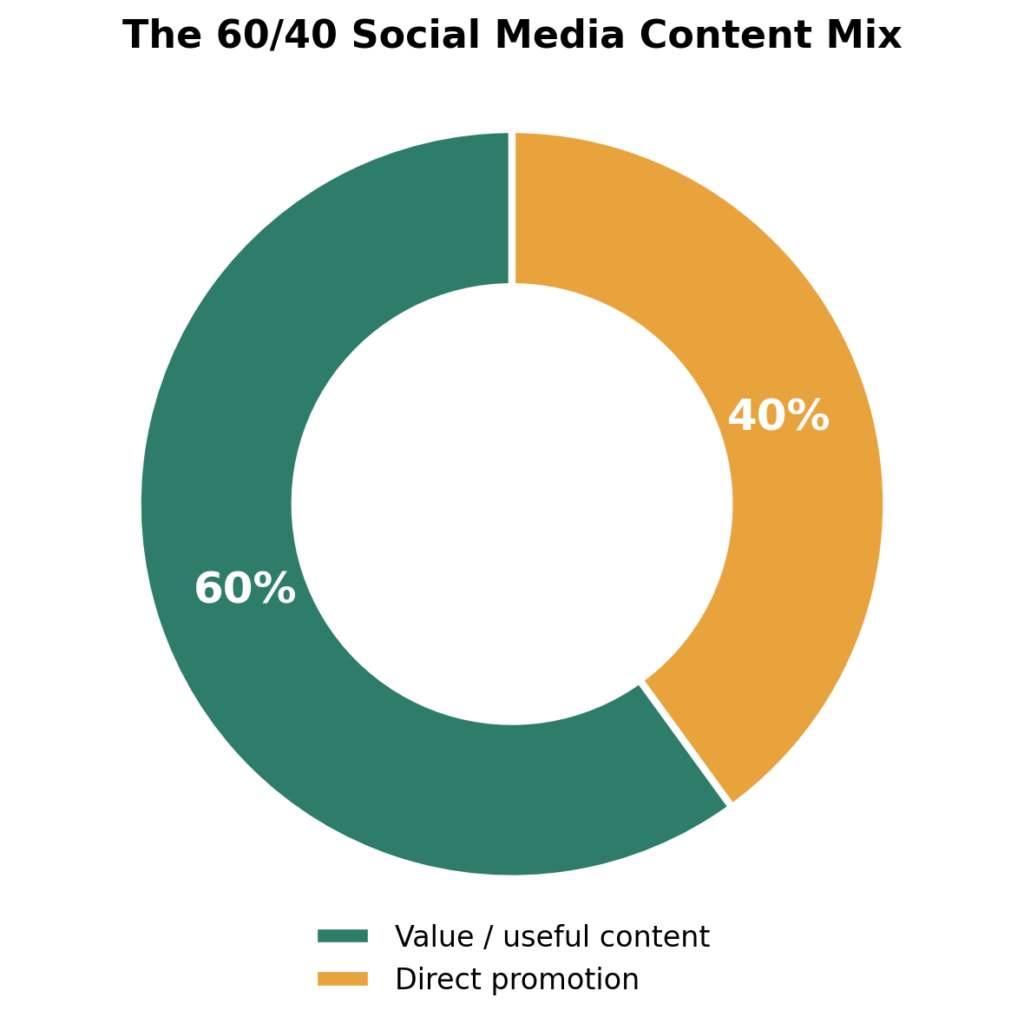
Keep a rough balance of something like 60% genuinely useful or entertaining content, 40% direct promotion. Lean too far toward selling and people stop watching.
Pay attention to what’s already being said about you. Social listening isn’t just a buzzword; it surfaces content ideas and catches unhappy customers before they escalate somewhere public.
And measure engagement, not just follower count. A smaller audience that actually comments, shares, and messages you back is worth more than a bigger one that scrolls past silently.
Mistakes That Quietly Undo All of This
- Posting in bursts, then disappearing for weeks
- Copy-pasting the same content across every platform without adjusting tone or format
- Leaving comments and DMs unanswered, which reads as nobody’s actually there
- Chasing follower counts instead of the metrics that connect to actual revenue
- Running social media as its own island, disconnected from SEO, ads, and the rest of the brand’s strategy
Frequently Asked Questions
What is the main goal of social media marketing? It depends on the business, but it usually comes down to one of three things: building brand awareness, keeping an existing audience engaged, or driving direct leads and sales. Trying to chase all three at once with the same content rarely works well. Most effective strategies pick a primary goal first.
How is social media marketing different from digital marketing? Digital marketing is the umbrella that covers SEO, paid ads, email, content marketing, and more. Social media marketing is just one piece of that bigger picture, focused specifically on platforms like Instagram, Facebook, and LinkedIn.
How often should a business post on social media? There’s no magic number, honestly. What matters more is consistency. Three or four well-planned posts a week, kept up over months, tends to beat daily posting that burns out after two weeks.
Does social media marketing help with SEO? Not as a direct ranking factor, no. But indirectly, yes active social profiles drive brand searches and referral traffic, and the content you create for social often ends up supporting your search visibility too.
What’s the difference between organic and paid social media marketing? Organic relies on unpaid content built up over time. Paid uses ad budgets to reach specific audiences faster. Most businesses that do this well use both organic for the long-term trust, paid for speed when they need it.
Final Thoughts
Social media marketing in 2026 isn’t really about being everywhere at once. It’s about showing up consistently, with something actually worth seeing, on the one or two platforms where your audience already is. The businesses seeing real leads and sales from social media aren’t the ones posting the most, they’re the ones treating it like an ongoing conversation instead of a broadcast.
If you’re not sure where to start, our social media marketing service covers strategy, content, and paid campaigns end to end. And if you’re weighing agencies before you commit to one, our guide on choosing the best digital marketing agency in Trivandrum is worth a read first.