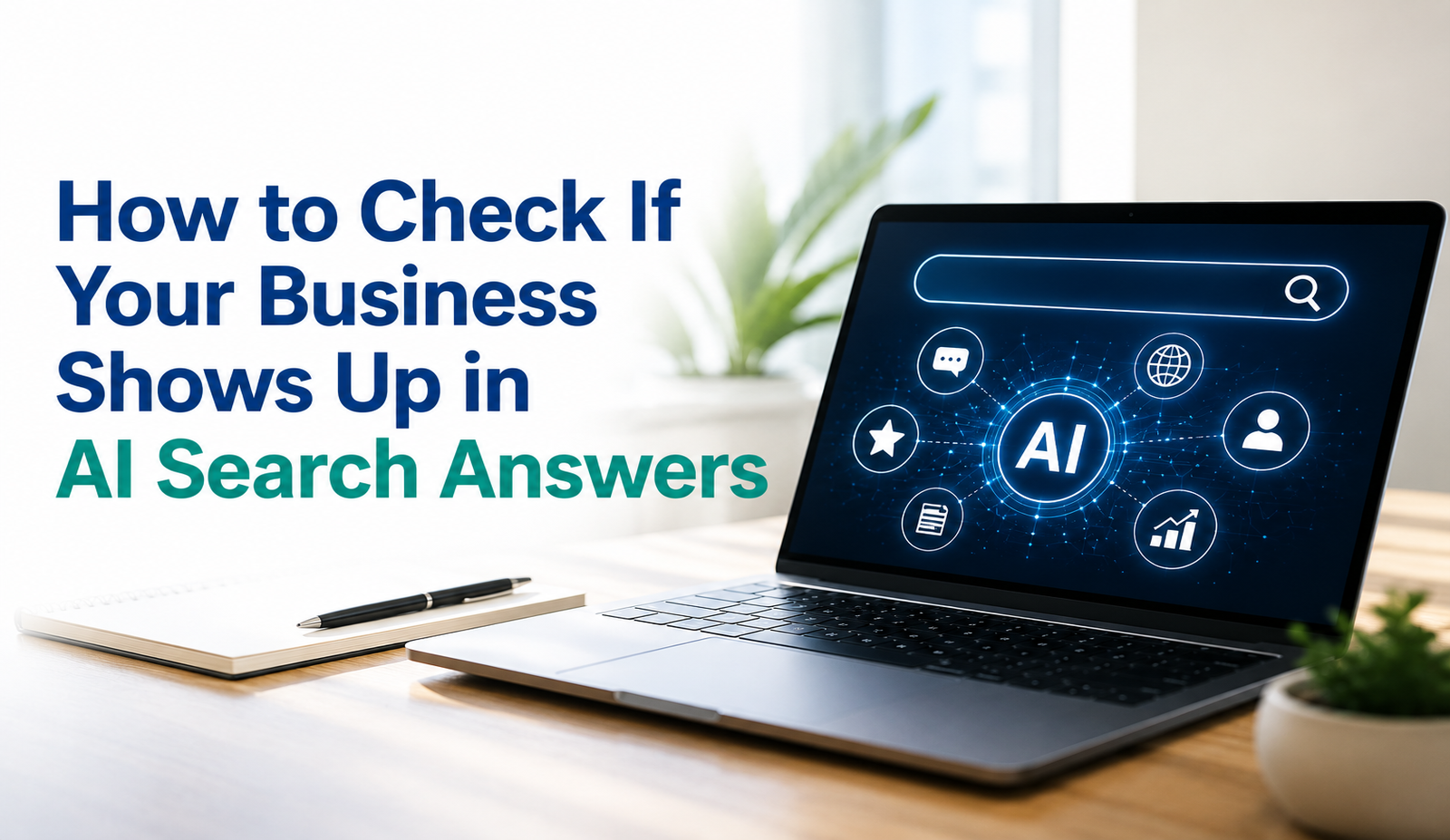
Search has quietly changed. People no longer type a query and scroll through ten blue links. They ask ChatGPT, Gemini, or Perplexity a question and expect one clear answer. If your business isn’t part of that answer, you’re invisible to a growing share of your customers.
This shift has a name: Generative Engine Optimization, or GEO. It sits alongside traditional SEO but focuses on one specific goal getting your brand mentioned, cited, or recommended inside AI-generated responses. In this guide, we’ll show you how to check your current AI search visibility and what to do if your business is missing.
What Is AI Search Visibility, and Why Does It Matter Now
AI search visibility means how often, and how accurately, your business appears when someone asks an AI engine a relevant question. This is different from ranking on Google. There’s no position one or position ten. Either the AI mentions you, or it doesn’t.
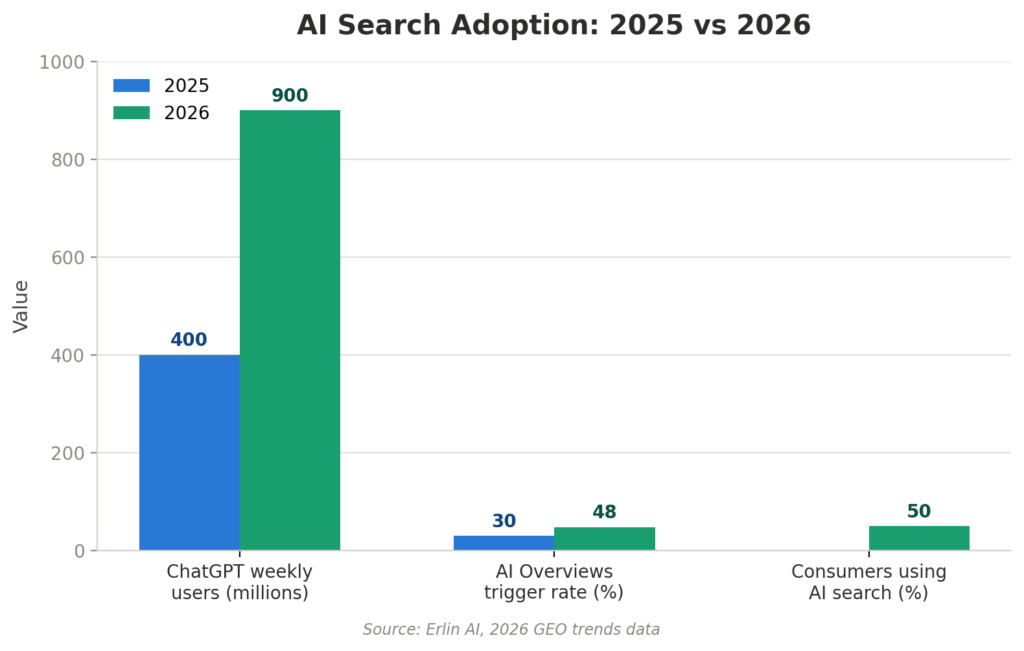
This matters because AI-powered search has moved from experiment to habit. Millions of people now use ChatGPT, Gemini, and Perplexity every single day for research, comparisons, and buying decisions. According to industry analysis from Search Engine Land, AI search adoption is moving well beyond early experimentation as users settle into loyalty toward a preferred AI engine. Many of them skip traditional search entirely. If your competitors show up in these answers and you don’t, they win the customer before you even know there was a race.
The Simple Test You Can Run Today
You don’t need expensive software to get a first read on your AI visibility. A short manual test works well as a starting point.
Step 1: List Your Key Questions
Write down 10 to 15 questions your customers might ask an AI assistant. Think about what someone searches before they buy. For example, “best interior design company in Dubai” or “top gold buyers in Kerala.”
Step 2: Ask the Big Three AI Engines
Type each question into ChatGPT, Gemini, and Perplexity. Note whether your business name appears anywhere in the response. Also check how it’s described, since the wording matters as much as the mention itself.
Step 3: Track What You Find
Keep a simple spreadsheet. Record the question, the AI engine, whether you were mentioned, and which sources the AI cited instead. Over time, this becomes a useful baseline you can measure improvement against.
Why Your Business Might Be Missing From AI Answers
If your brand didn’t show up during the test, you’re not alone. Most small and mid-sized businesses are still invisible in AI search. A few common reasons explain why.
Weak Structured Content
AI engines pull information from content that answers questions clearly and quickly. If your website buries the answer under long, vague paragraphs, the AI has little to extract and cite.
No Third-Party Mentions
AI models weigh trust signals from across the web, not just your own site. Reviews, directory listings, press mentions, and other independent sources all influence whether an AI considers you a credible answer.
Outdated or Inconsistent Information
If your business name, services, or location details differ across platforms, AI engines struggle to confirm which version is accurate. Inconsistency often means exclusion.
How to Improve Your AI Search Visibility
Once you know where you stand, you can start closing the gap. These steps offer a practical starting point.
- Write answer-first content. Open sections with a direct, concise answer before adding supporting detail. AI engines favor content that gets to the point quickly.
- Structure content clearly. Use headings, bullet points, and short paragraphs so both readers and AI systems can scan and extract information easily.
- Build genuine third-party mentions. Encourage reviews, seek local press coverage, and maintain accurate directory listings. These sources strengthen your credibility signals.
- Keep information consistent everywhere. Match your business name, address, and service details across your website, Google Business Profile, and social platforms.
- Publish original insights. Data, case studies, and firsthand experience are harder for AI engines to ignore than generic, recycled advice.
GEO vs AEO vs AI Overviews: Clearing Up the Confusion
You may have come across several similar-sounding terms, and it’s easy to mix them up. Generative Engine Optimization, or GEO, is the umbrella term for optimizing content so AI tools can find, understand, and cite it. Answer Engine Optimization, or AEO, refers to the same broad idea and is often used interchangeably with GEO. AI Overviews, meanwhile, is Google’s specific feature that generates summarized answers at the top of search results.
In short, GEO and AEO describe the strategy. AI Overviews is one visible outcome of that strategy in Google search. Understanding this distinction helps you talk about the topic accurately with your team or clients.
Here’s a quick side-by-side look at how the two approaches differ in practice:
Frequently Asked Questions
Does GEO replace traditional SEO? No. Traditional SEO and GEO work together. Strong technical SEO and quality content remain the foundation that AI engines pull from, so neglecting SEO will hurt your GEO efforts too.
How long does it take to see results from GEO efforts? Most businesses notice early signals within four to eight weeks, though full visibility improvements often take a few months. AI engines update their training and retrieval sources gradually, so consistency matters more than speed.
Can small, local businesses realistically compete in AI search? Yes. AI engines often favor specific, well-documented local information over generic content from larger competitors. A business with accurate, detailed local content can outperform bigger brands in local AI answers.
Do I need special tools to track AI visibility? Not at the start. Manual testing across ChatGPT, Gemini, and Perplexity gives you a solid baseline. As your strategy matures, dedicated AI visibility tracking tools can offer more detailed monitoring.
Getting Started with AI Search Visibility
AI search isn’t a distant trend anymore. It’s already shaping how customers discover and choose businesses today. Running a simple visibility test this week gives you a clear picture of where you stand, and small, consistent improvements to your content and online presence can shift that picture over time.
If you’d like help building a structured GEO strategy for your business, Techbound a digital marketing agency working with clients across Trivandrum and beyond can help strengthen exactly this kind of AI search visibility.