

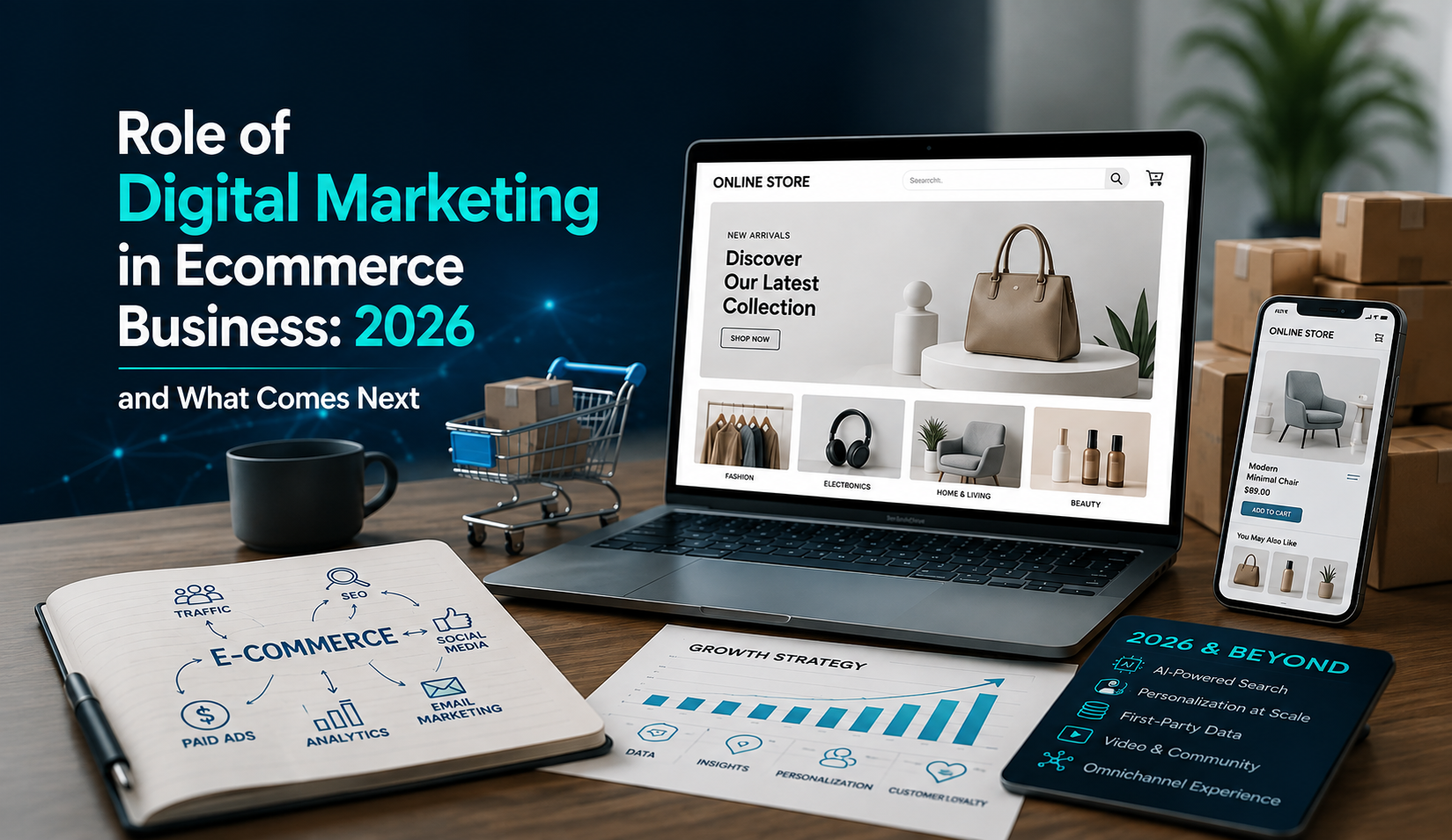
Ask an ecommerce founder what digital marketing means to their business, and a few years ago you’d probably have gotten a fairly narrow answer: some SEO, a few ad campaigns, maybe an email list. That answer just doesn’t hold up anymore. Digital marketing has quietly become the operating layer of ecommerce itself, touching everything from how a product gets discovered to whether a customer ever bothers coming back to buy again.
That shift is worth unpacking, because it changes how ecommerce businesses should actually be allocating their time and budget going into 2026.
Why Digital Marketing Now Sits at the Core of Ecommerce
An ecommerce store without a strong digital marketing engine is, in practical terms, invisible. There’s no foot traffic to fall back on, no physical storefront pulling people in off the street. Every single customer arrives through some digital pathway: organic search, a social feed, a recommendation inside an AI assistant, a retargeting ad, a referral link. Digital marketing isn’t a department sitting next to the ecommerce business anymore. It’s the mechanism the business runs on, whether founders think about it that way or not.
That’s a meaningful shift in how founders need to think about it. It’s not a cost center to trim the moment budgets get tight. It’s closer to inventory or logistics, a core function that, if it breaks down, the rest of the business feels almost immediately.
Discovery Has Splintered Across More Channels Than Ever
A few years ago, “discovery” mostly meant ranking on a search engine results page. That’s still important, but it’s no longer the whole picture, not by a long way. Shoppers now find products through AI-generated search summaries, short-form video, creator recommendations, and conversational assistants that summarize and compare options long before a customer ever lands on a website.
This means ecommerce marketing has to work across more surfaces at once. Structured, clearly written product content matters more than it used to, partly because AI systems parsing that content need it to be accurate and easy to summarize correctly. Trust signals genuine reviews, consistent business details across platforms, credible third-party mentions carry real weight here too, since these systems tend to lean on sources that appear well-corroborated. Brands treating this as its own discipline, often called generative engine optimization or answer engine optimization, are simply getting a head start on competitors still purely chasing traditional rankings.
Personalization Has Moved From "Nice to Have" to Expected
Shoppers aren’t impressed by a first name in an email subject line anymore. What they expect now is closer to a store that seems to already know what they’re looking for product recommendations, pricing, even page layouts that adjust based on real browsing behavior rather than generic segments.
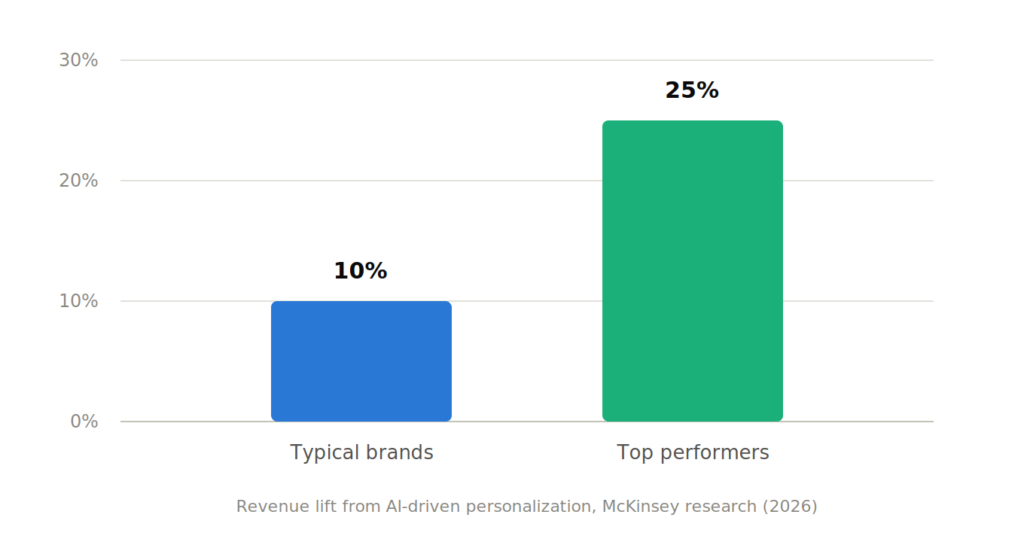
The businesses seeing the strongest returns here tend to be ones with high purchase frequency and wide product variety fashion, beauty, general retail where personalization simply has more surface area to work with. McKinsey’s research puts the typical revenue lift from personalization at 5 to 15 percent, with the strongest performers pushing well past that, according to Triple Whale’s 2026 AI ecommerce data. Lower-frequency, higher-consideration categories like furniture or luxury goods see smaller gains from personalization alone; trust and research still drive those decisions more than a tailored homepage ever will.
First-Party Data Has Become Foundational, Not Optional
With third-party cookies largely gone from major browsers, the ecommerce brands with a real targeting edge are the ones that started building their own customer data early through loyalty programs, gated content, quizzes, direct account creation. Retargeting and lookalike audiences now depend far more on the quality of a brand’s own data than on data borrowed from ad platforms. It’s one of those shifts that’s easy to underestimate, right up until a business notices its retargeting performance has quietly been sliding for months and nobody can quite say why.
Video and Community Are Doing More of the Selling
Shoppable video product demos, unboxings, creator-led reviews built directly into the checkout flow remains one of the highest-converting content formats in ecommerce. What’s actually changed is how accessible producing it has become. A single video shoot can now be repurposed into dozens of platform-specific cuts without needing anywhere near the production budget it used to.
Alongside that, community-driven growth of private groups, creator partnerships, and genuine user-generated content has become a real counterweight to rising paid ad costs. It doesn’t replace paid media. But it tends to make paid spending work a lot harder, by building trust before a purchase decision instead of interrupting one mid-scroll.
Where Ecommerce Marketing Is Actually Headed
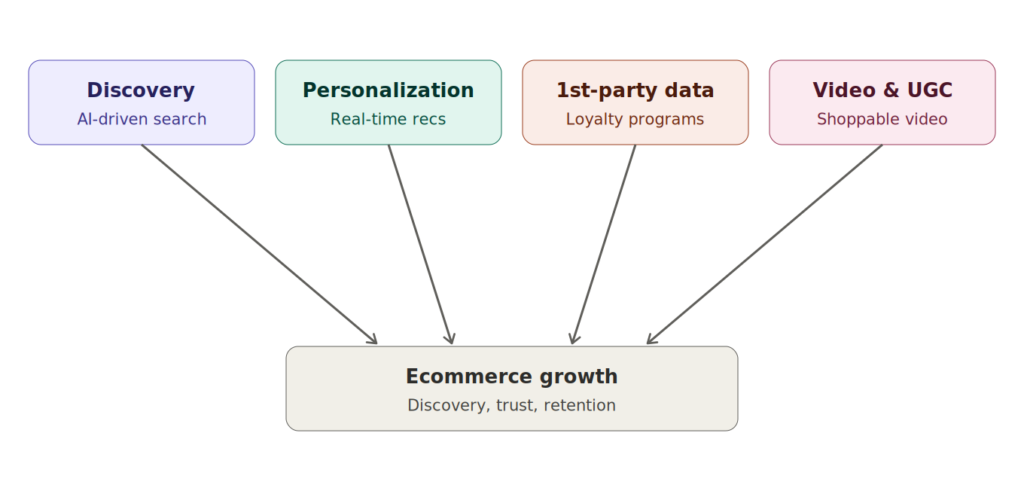
None of this replaces the basics, honestly. Solid product content, clean technical SEO, and genuine customer trust still matter exactly as much as they always have. What’s different is the sheer surface area a business now needs to cover AI-driven search, video-first discovery, and owned data strategy, all running at once rather than treated as separate boxes to tick.
Looking further out, the ecommerce businesses that pull ahead won’t be the ones chasing every new channel one at a time. They’ll be the ones treating discovery, personalization, and retention as connected parts of a single customer journey, with digital marketing running as the thread through all of it.
Frequently asked Questions
Why is digital marketing so important for ecommerce businesses? Because nearly every ecommerce customer arrives through a digital channel, there’s no physical storefront to fall back on. Digital marketing is the mechanism that drives visibility, trust, and repeat purchases.
What role does AI play in ecommerce marketing today? AI now shapes personalization, product discovery through AI-generated search summaries, and content creation, making it a core part of how ecommerce businesses reach and convert customers.
Is first-party data really necessary for small ecommerce stores? Yes. With third-party cookies largely phased out, first-party data collected through loyalty programs, accounts, and direct customer interactions has become essential for effective targeting.
Does traditional SEO still matter alongside AI search? Absolutely. Traditional SEO remains a major discovery channel; AI-driven search sits as an additional layer on top of it, not a replacement for it.
Figuring out which of these areas to prioritize usually comes down to where a business’s traffic and margins actually sit. That kind of strategy work, balancing traditional SEO with newer AI-driven search behavior, is something Techbound works through with ecommerce clients regularly.