

Buying property isn’t like buying most other things. It’s slow, emotional, and expensive and buyers do a lot of homework before they ever call an agent. That homework mostly happens online now. So if a real estate business isn’t showing up, ranking, and building trust digitally, it’s losing buyers before it even gets a chance to speak to them.
This guide walks through what digital marketing for real estate actually looks like in practice not theory, but the things that genuinely bring in inquiries and close deals.
1. Local SEO Is the Foundation
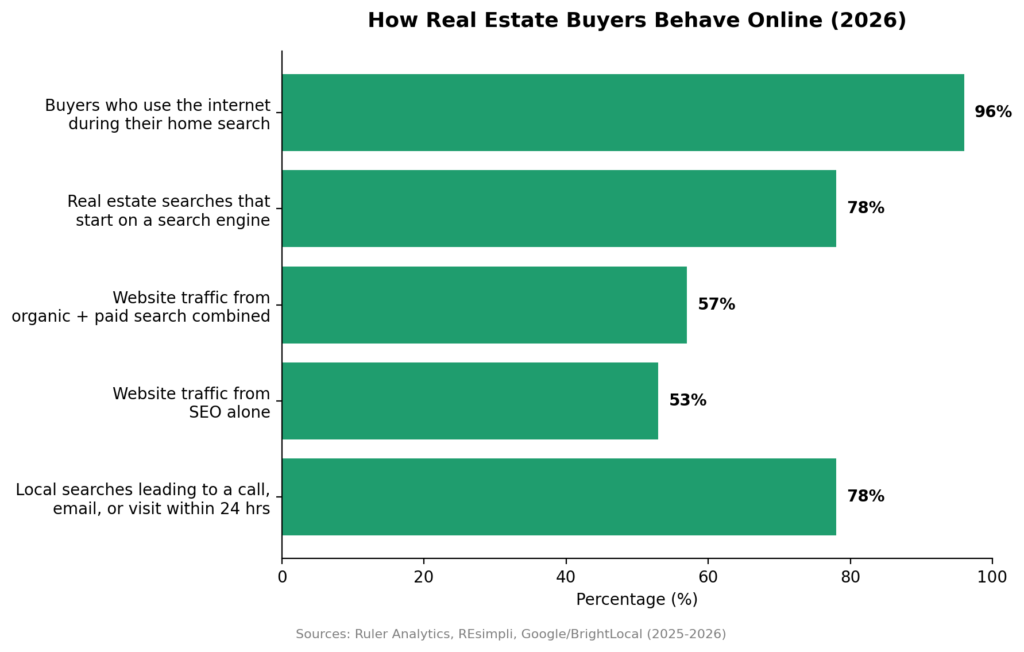
Most property searches are hyperlocal: “2BHK flats for sale in [area],” “villas near [landmark],” “real estate agents in [city].” A real estate business that isn’t optimized for these searches simply doesn’t exist to the buyer typing them.
Strong local SEO for real estate usually includes:
- A complete, accurate, and regularly updated Google Business Profile
- Location-specific landing pages for each area or project
- Consistent business listings across property portals and local directories
- Genuine local backlinks from relevant, reputable sources
Local SEO isn’t a one-time task. Profiles that stay active with regular posts, fresh photos, and consistent information tend to be treated by Google as more legitimate and relevant, while listings left untouched for months quietly slip down the rankings. For a deeper look at how profile activity affects rankings, CI Digital Group’s guide on GBP updates is a useful reference.
2. Your Google Business Profile Is Doing More Work Than Your Website
For real estate specifically, a Google Business Profile is often the first real impression a buyer gets — before they even click through to a website. Photos, reviews, service areas, and recent posts all shape whether someone picks up the phone or moves on to a competitor.
Keeping this profile complete, current, and responsive to reviews is one of the highest-leverage, lowest-cost things a real estate business can do.
3. Educational Content Builds the Trust Buyers Need
Property buyers research heavily before committing: market trends, area comparisons, the home-buying process, documentation basics. A real estate business that consistently publishes clear, genuinely useful content on these topics positions itself as a knowledgeable, trustworthy local expert, not just another set of listings.
This also does double duty for SEO. Content built around real buyer questions (“home buying process in [city],” “is now a good time to buy property in [area]”) attracts organic traffic from people who are already in the decision-making phase, not just browsing.
4. Social Media Should Drive Discovery, Not Just Likes
Real estate is a visual product, which makes Instagram and Facebook natural fits listings, walkthroughs, before-and-afters, project updates. But visibility alone doesn’t fill a pipeline. What works is treating social media as a discovery-to-inquiry path: strong visuals, clear calls to action, and consistent posting rather than occasional bursts.
Short-form video in particular quick property tours, market updates, FAQ-style clips tends to perform well, especially with younger, first-time buyers who research primarily on their phones.
5. Paid Campaigns Fill the Gap While Organic Grows
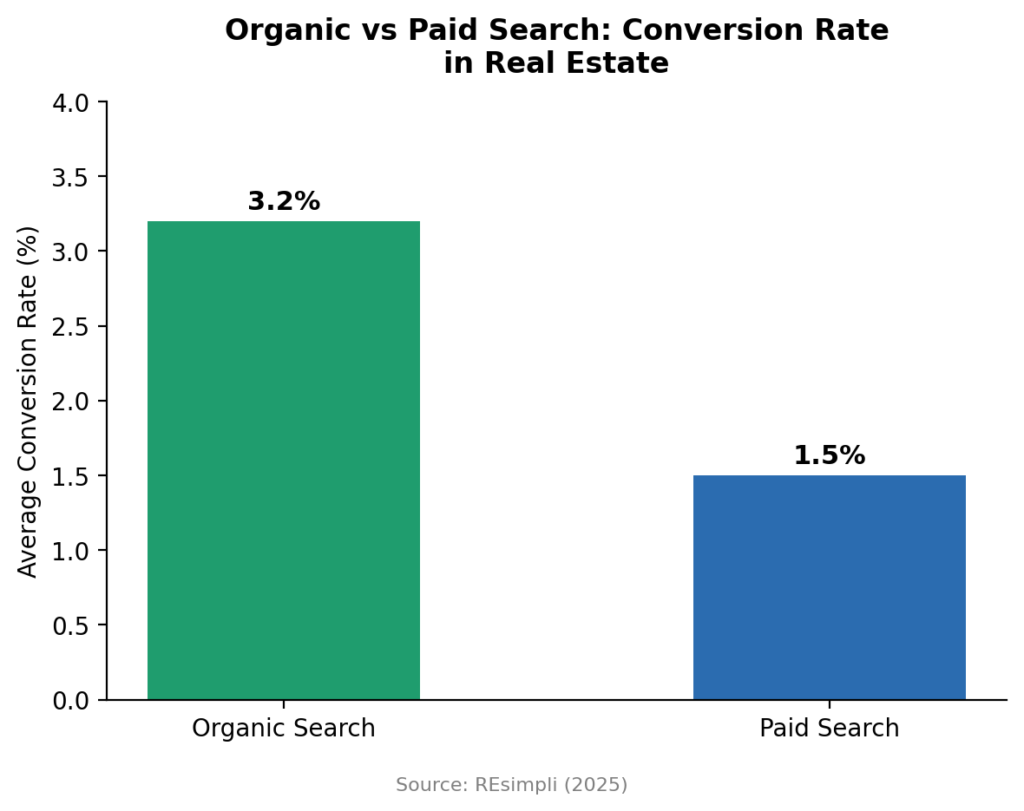
Organic visibility takes time to build. In the meantime, targeted Google Ads on high-intent search terms and Meta Ads aimed at specific locations and buyer profiles help keep inquiries coming in. Precision matters here broad, untargeted campaigns burn through budget quickly, especially since the buyer pool for any single project is naturally limited.
Retargeting people who’ve already viewed a listing but didn’t inquire is consistently one of the more effective tactics, since it re-engages buyers who’ve shown real intent.
6. Lead Generation Needs a Follow-Up System, Not Just Ads
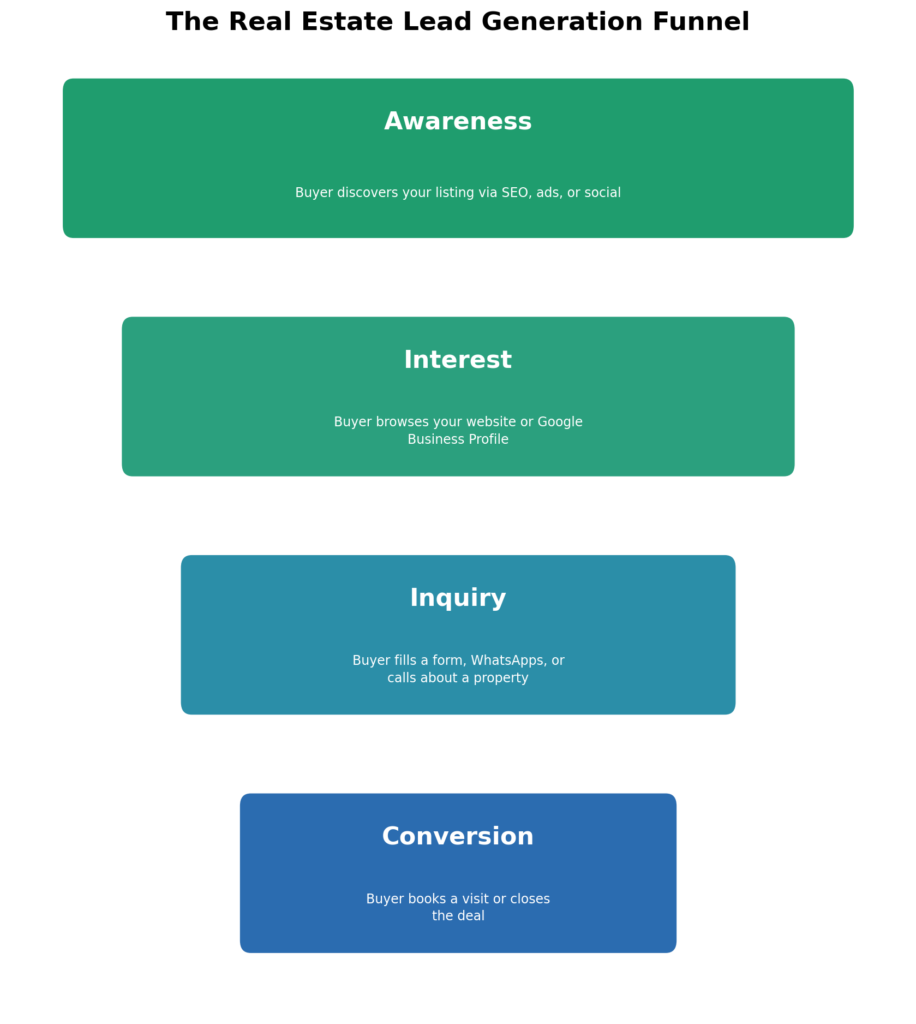
Running ads without a solid follow-up process means leads slip through. A real lead generation setup for real estate typically includes conversion-focused landing pages (not just the homepage), low-friction inquiry forms, WhatsApp and call integration for instant response, and a clear process so leads don’t go cold.
Speed matters more than most businesses expect property buyers frequently reach out to several agents at once, and the fastest, most helpful response is usually the one that wins the client.
7. AI-Powered Search Is Changing How Buyers Find Property
Google’s AI Overviews and AI Mode increasingly answer property-related questions directly within search results, drawing from clear, well-structured content. Real estate businesses that keep their web content organized and genuinely informative are better positioned to be referenced as these AI-driven answers become more common, while thin, listing-only pages risk fading from visibility.
Frequently asked Questions
How is digital marketing different for real estate compared to other industries? Real estate marketing centers on high-trust, high-consideration decisions with long research cycles, so it leans heavily on local SEO, visual content, and consistent trust-building rather than quick-conversion tactics.
What’s the fastest way to generate real estate leads online? A combination of targeted Google and Meta ads paired with fast follow-up (call or WhatsApp) tends to generate the quickest results, though it works best alongside a strong organic and local SEO foundation.
Do real estate businesses need a website if they already list on property portals? Yes portals bring visibility but limit branding and lead ownership. A well-optimized website builds long-term SEO value and gives full control over the buyer’s journey.
How often should a real estate business post on social media? Consistency matters more than frequency. A steady rhythm of 3-4 posts a week, mixing listings, market insights, and behind-the-scenes content, tends to outperform sporadic high-volume posting.
Techbound works with real estate businesses across Kerala to build digital strategies covering SEO, performance marketing, and lead generation helping them turn online visibility into real, qualified inquiries.