
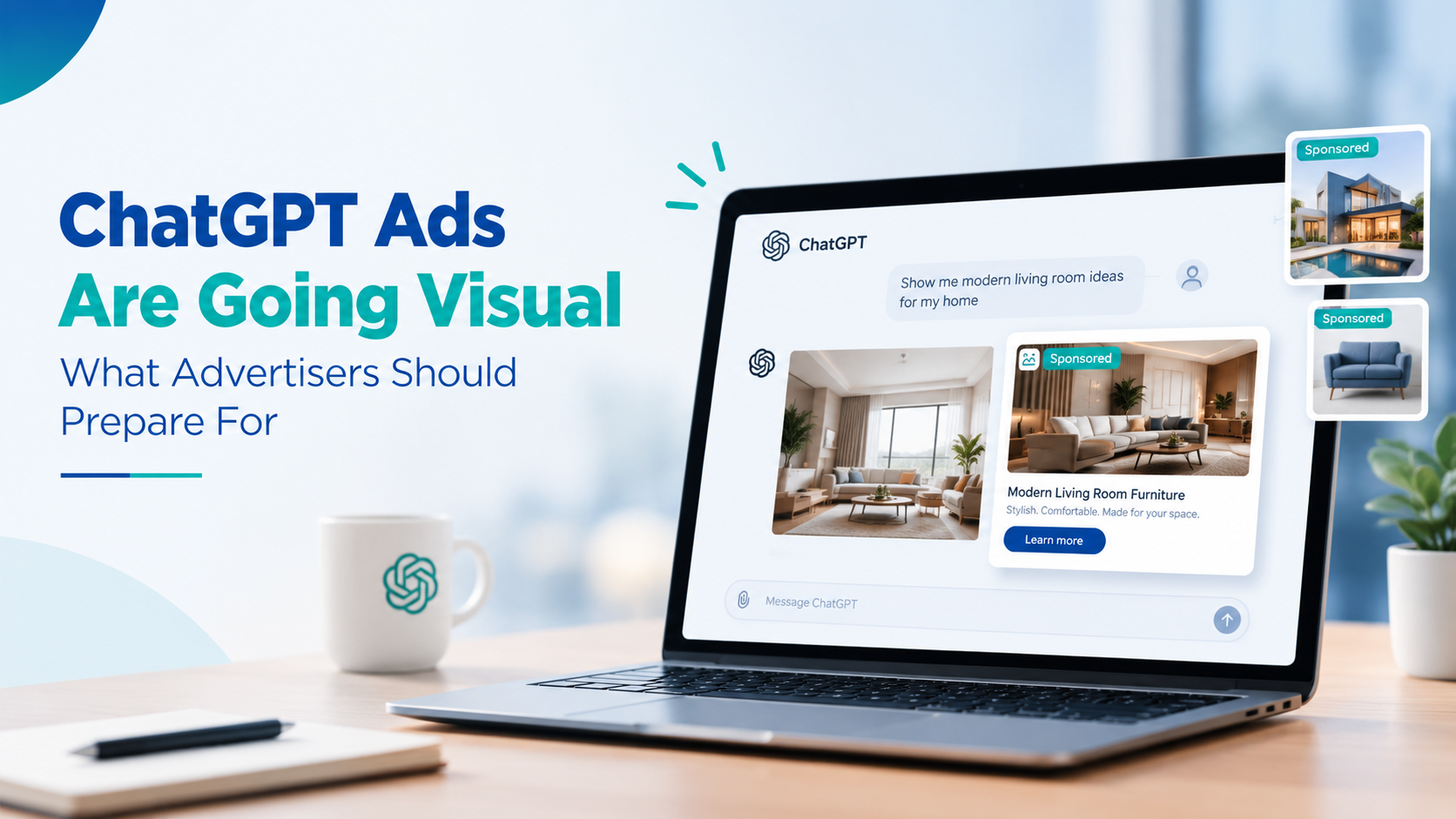
A few weeks ago, ChatGPT ads were a small labelled card under a text answer. Simple to understand, and easy to ignore if you were busy. This month the conversation moved on. OpenAI has announced a visual ad format and a stronger set of measurement tools, and together they say a lot about where the platform is heading.
If you read our earlier note on ChatGPT ads in India, you already know how the basic format works. This post is about what comes next, and what sensible advertisers in India should do about it right now, which is less than the headlines suggest.
What OpenAI Announced on October 5
OpenAI said it will begin testing visual ads during image generation in ChatGPT, starting later this month in the US. According to BleepingComputer, the ads may use imagery to show product inspiration, how a product is used, or the experience tied to a service. OpenAI says the ads will be clearly labelled and kept separate from the image being created, and it repeated that ads do not influence ChatGPT’s answers.
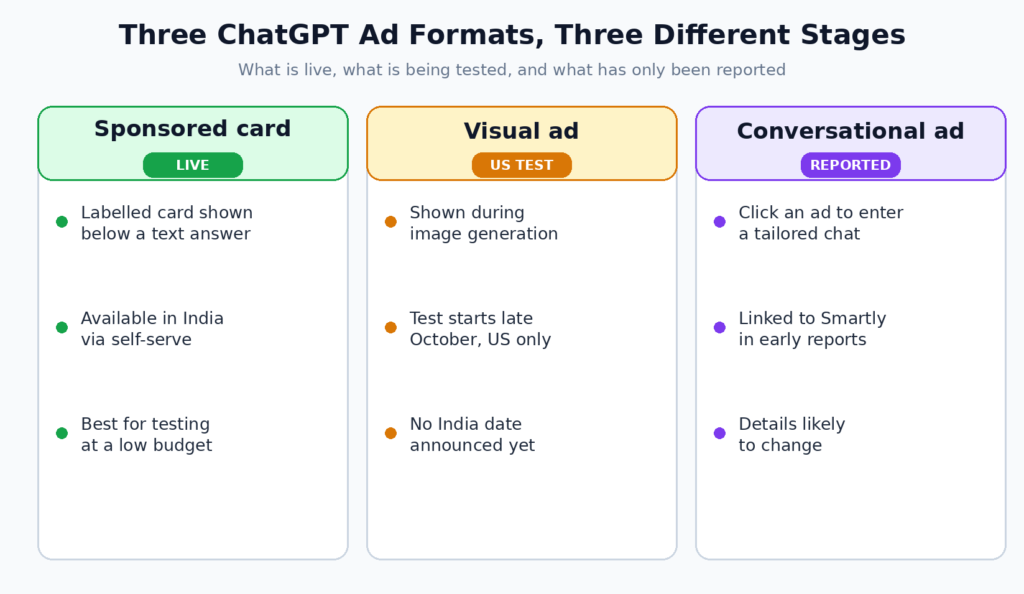
Two things are worth noticing. The test is small and limited to the US, and OpenAI has not shared when wider availability might come. Nothing has been confirmed for India. So this is a signal about direction, not something you can buy tomorrow.
Why Image Generation, of All Places?
Our read, as people who spend most days inside ad accounts, is that it is a smart starting point. Someone asking for a mock-up of a living room, a wedding invitation theme, or a product concept is usually mid-decision. They are already imagining an outcome. A relevant visual at that moment can feel like a suggestion rather than an interruption, provided it stays clearly separate from what the user is creating. If that line blurs, trust drops quickly, and OpenAI seems aware of it.
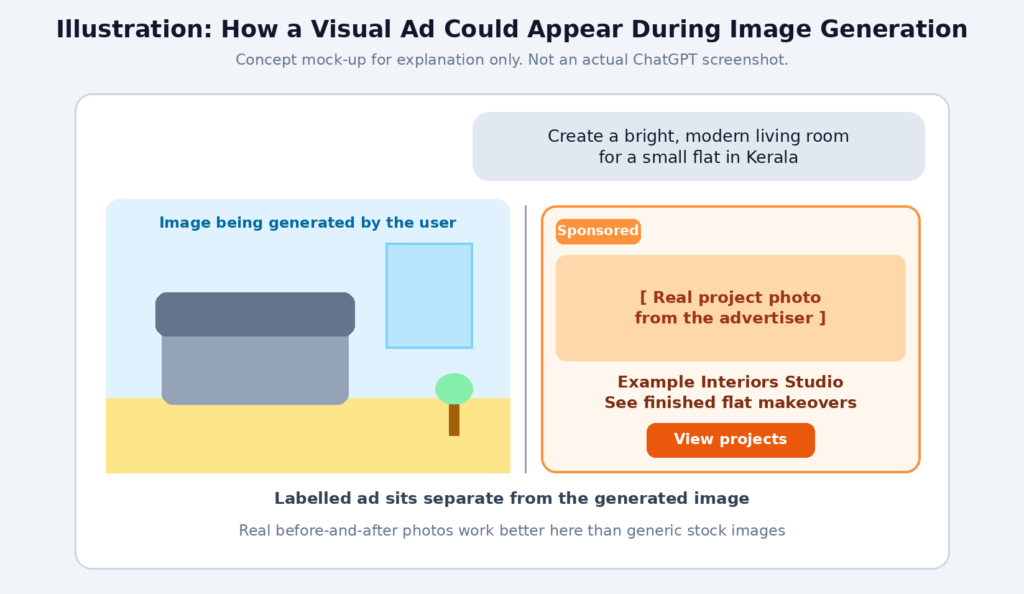
“Illustration only. The real format may look different when it launches.”
What Changes for Creative Teams
Text-only placements rewarded a sharp line and a clear offer. Visual placements will reward real imagery: finished projects, products in use, honest before-and-after shots. Businesses with a decent photo library will move faster than those who need to build one from nothing. Generic stock photos will probably look out of place in a format built around showing how something is actually used.
Measurement and Brand Suitability: The Quieter Part of the Update
The visual format got the headlines, but we think the measurement side matters more for anyone spending real money. OpenAI is adding tools that help advertisers see whether ads lead to purchases or other conversions, and it is working with DoubleVerify and Integral Ad Science on brand suitability.
That second point deserves a moment. On a normal website you can exclude pages you do not want to appear beside. In a chat, the “page” is a conversation nobody can predict. Third-party verification is a way of giving advertisers some confidence about where their brand lands. For agencies, it also means monthly reports can rest on conversion data rather than clicks and impressions alone, which makes client conversations far more honest.
Conversational Ads: What Has Been Reported So Far
There is a third thread to watch. As The Next Web reported, OpenAI has been working with ad-tech firm Smartly on interactive formats, where a user clicks an ad and enters a tailored chat experience, almost a small conversation inside the larger one. This comes from early partnership reporting, so treat the specifics as likely to change.
If it does arrive, the way we judge performance will shift. Clicks will matter less than whether the conversation actually helped someone decide. Nobody has settled on standard metrics for that yet, so early advertisers will be writing their own rulebook.
What This Means for Businesses in India
Treat Visual Ads as a Preview, Not a To-Do Item
The visual test is US-only for now. Businesses using the self-serve platform that opened in India last month should keep running what is available and watch for announcements. Rushing to build campaigns for a format you cannot yet buy helps nobody.
Preparation That Costs Almost Nothing
Most of the useful preparation has little to do with media budgets.
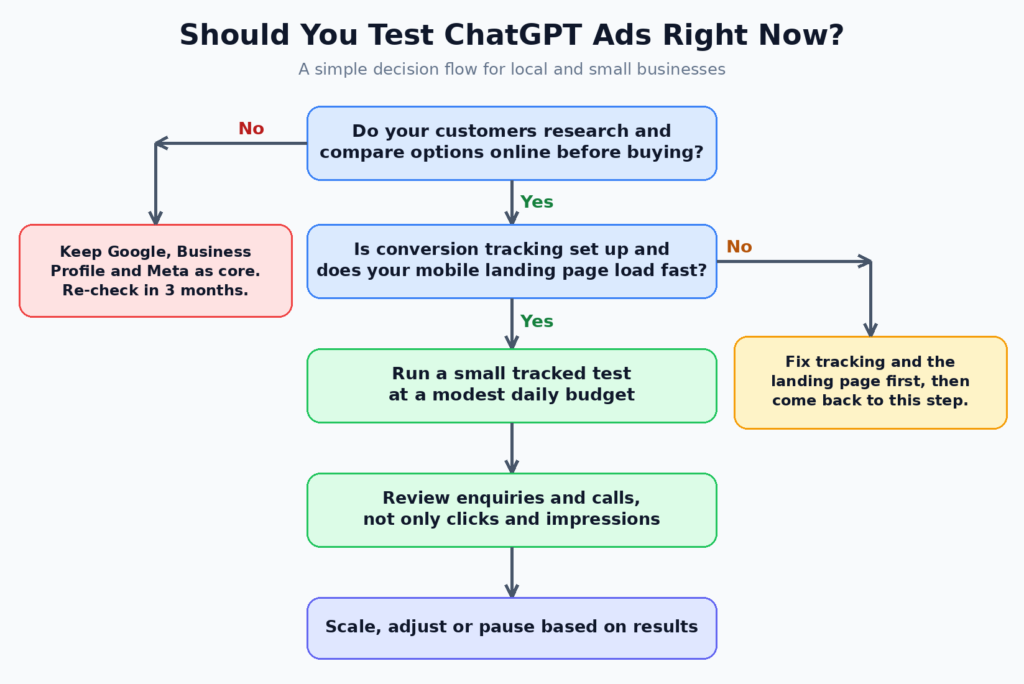
First, organise your visual assets: real project photos, product shots, and short clips of the service at work. Second, fix your landing pages. If a ChatGPT user clicks through and meets a slow, cluttered mobile page, no ad format will save that visit. Third, set up conversion tracking properly, because a platform leaning toward measurement rewards advertisers who can connect a click to an enquiry or a call. Fourth, watch your organic footprint. Paid placement and AI search visibility feed each other, and a brand that AI tools understand clearly is easier to advertise as well.
Where It Fits in a Local Marketing Mix
For businesses whose customers are local and influenced offline, such as renovation contractors, gold buyers, or property sellers, we still see Google Business Profile, local SEO, and Meta as the core. ChatGPT is a small test channel. Our guide to online advertising in Kerala explains how we usually split budgets, and our earlier post on the ChatGPT ads launch covers how this all began.
What Could Go Wrong
It is fair to stay a little sceptical. Early formats on any new platform tend to change, and results from one market do not always carry over to another. Users may also react badly if ads feel too close to the creative work they are doing. OpenAI’s help documentation on ads in ChatGPT is worth bookmarking, since policies on placement and sensitive topics can be updated. A small, tracked test is far wiser than a big bet.
Frequently Asked Questions
Are ChatGPT visual ads available in India?
Not yet. OpenAI plans a US test with select advertisers later this month, and wider availability has not been announced.
Will visual ads change what ChatGPT generates?
OpenAI says the ads are separate from the generated image and do not influence responses.
Does ChatGPT now offer conversion tracking?
OpenAI says it is adding tools to measure purchases and other conversions. Exact features may change as the rollout continues.
Should small businesses wait for visual ads before testing?
Not necessarily. The current format can be tested at a modest budget while you prepare creative assets for later formats.
Where to Start
New platforms change quickly, and the useful question is always where a channel fits your customers, not whether it is trending. A digital marketing agency in Trivandrum like Techbound can help you review your current channels and decide when a ChatGPT test actually makes sense.