

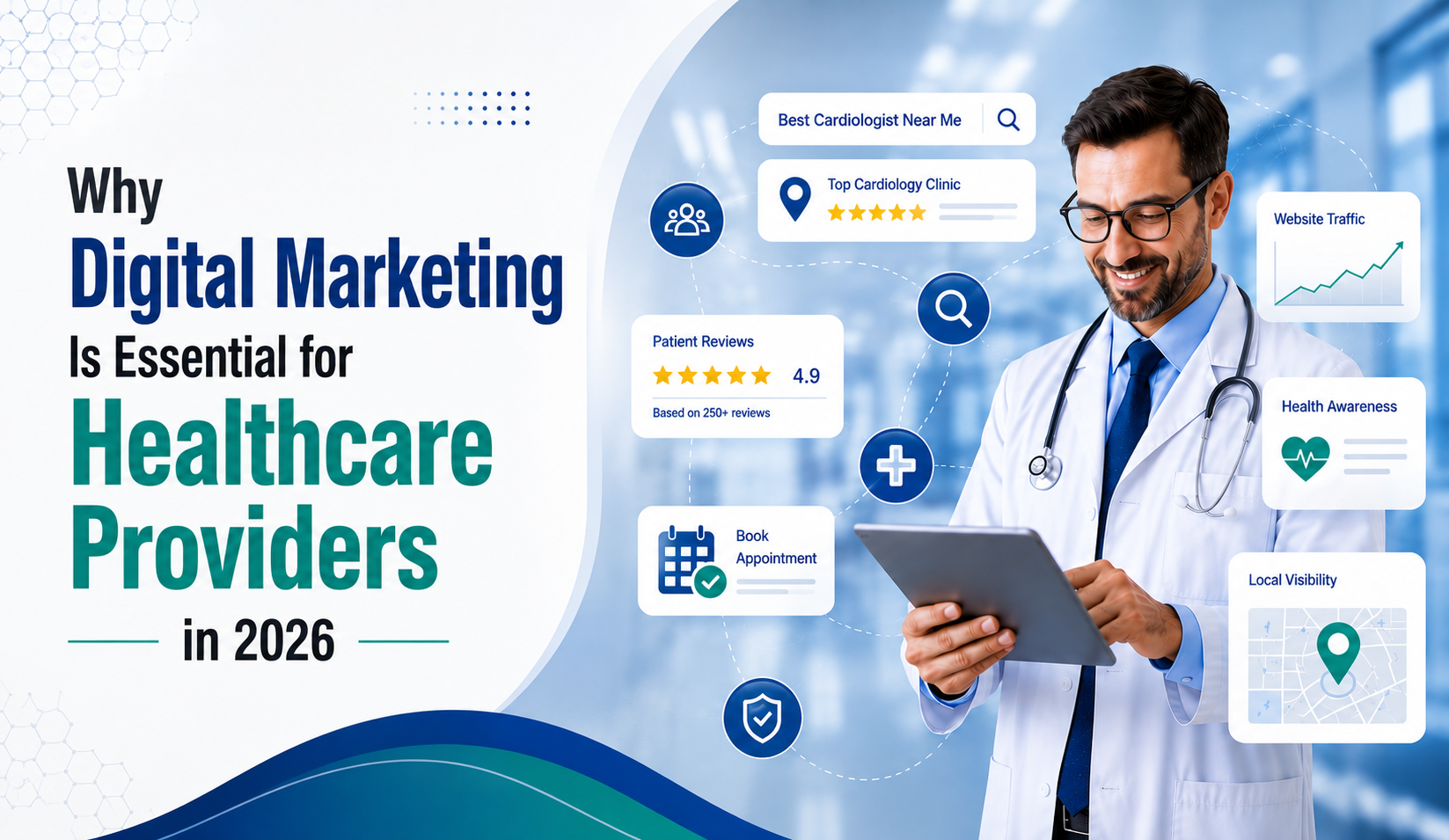
A patient searching for a nearby clinic, a specialist, or answers to a health concern rarely starts with a phone book or a friend’s recommendation anymore. They start with a search on Google, sometimes now through an AI assistant, almost always on a phone.
How a healthcare provider shows up at that moment, or whether they show up at all, has quietly become one of the biggest factors shaping which patients walk through the door.
Healthcare has traditionally been slower than other industries to invest seriously in digital marketing. Many providers still rely on reputation, word-of-mouth referrals, and location alone. That approach is no longer enough.
Patients now expect the same digital experience from a clinic that they get from any other service. That means a functioning website, medical practice SEO that actually surfaces relevant answers, and healthcare online reputation they can verify before ever picking up the phone. They look for clear information, fast answers, real reviews, and a site that works properly on a phone screen.
Google classifies health-related content under its “Your Money or Your Life” (YMYL) category pages where inaccurate information could genuinely affect someone’s wellbeing. Google’s own Search Quality Rater Guidelines hold YMYL pages, healthcare content included, to a noticeably higher bar for expertise and trustworthiness than most other content types. That makes a deliberate digital strategy even more important for providers in this space.
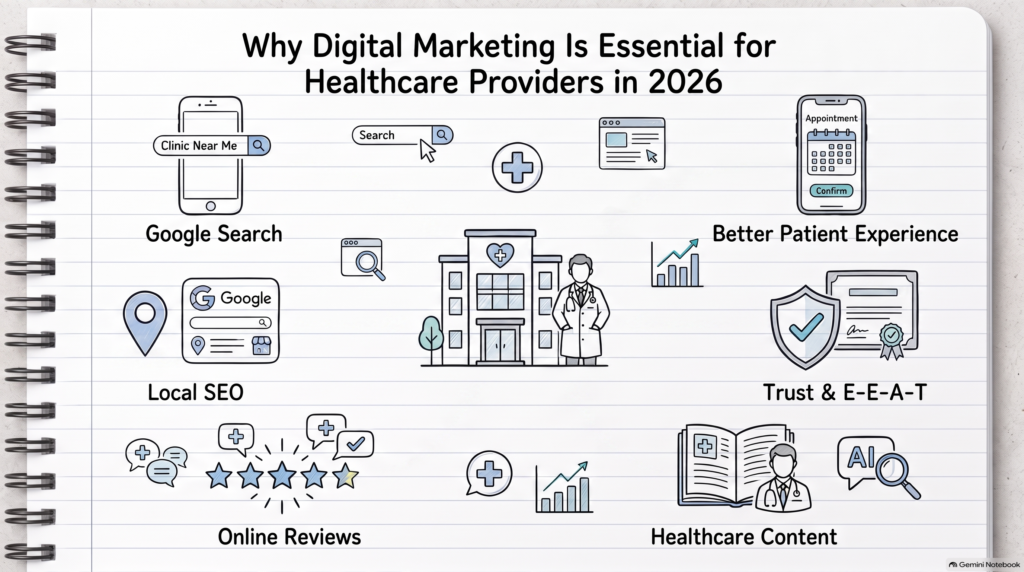
Trust Is Built Online Before a Patient Ever Calls
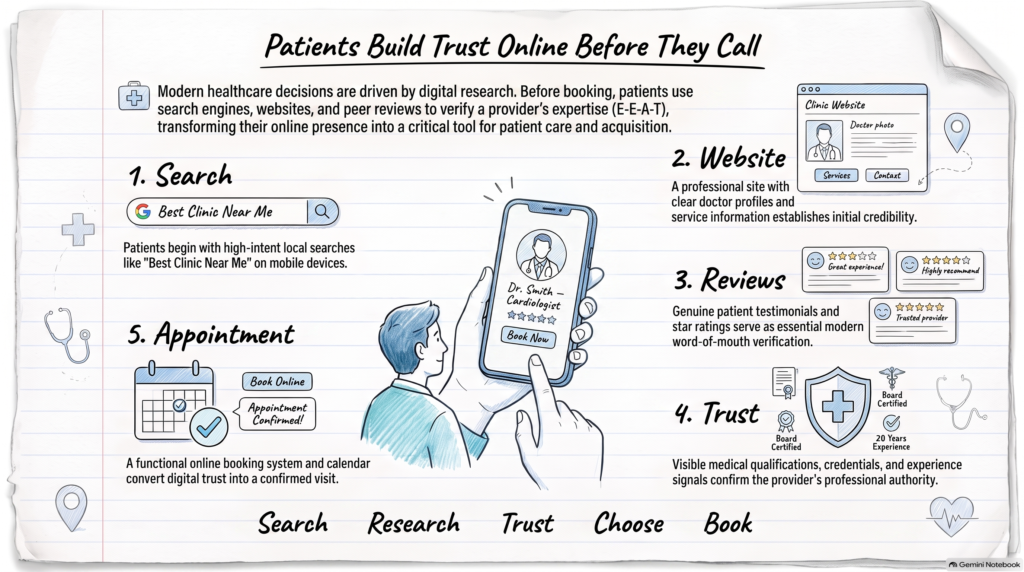
Healthcare decisions carry more weight than most purchases, which makes trust the deciding factor in almost every patient choice. Before booking an appointment, most patients now research a provider’s credentials, read patient reviews, and check how other patients describe their experience. They look for clear, accurate information about conditions and treatments.
This is where digital marketing does more than drive traffic; it shapes perception.
A provider with an outdated website, inconsistent information across platforms, or no visible reviews creates doubt before a patient ever makes contact. A provider with a clear, informative online presence, accurate service pages, genuine patient testimonials, and content that answers real health questions builds credibility long before the first appointment.
Local Search Is Where Most Healthcare Decisions Begin
For hospitals, clinics, and individual practitioners, local SEO and local search visibility are often the single most important digital factor. Searches like “dentist near me” or “pediatrician in [city]” are high-intent the person searching is usually ready to book, not just browsing.
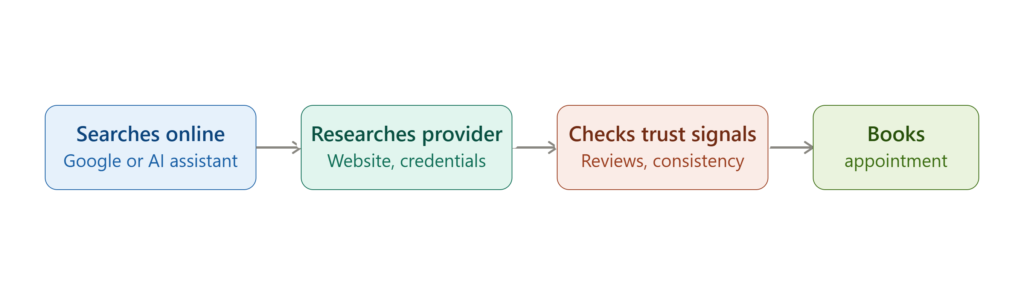
Showing up accurately and consistently in these local results depends on several things working together:
- An optimized Google Business Profile
- Consistent name-address-phone (NAP) details across every online listing and healthcare directory
- Positive and recent patient reviews
- Location-specific content on the provider’s own website
Providers who neglect this often lose patients not because their care is worse, but simply because they were harder to find.
Patient Education Content Builds Long-Term Authority
Search engines and AI-driven answer systems increasingly reward healthcare content that demonstrates real expertise. This principle is often referred to as E-E-A-T: experience, expertise, authoritativeness, and trustworthiness.
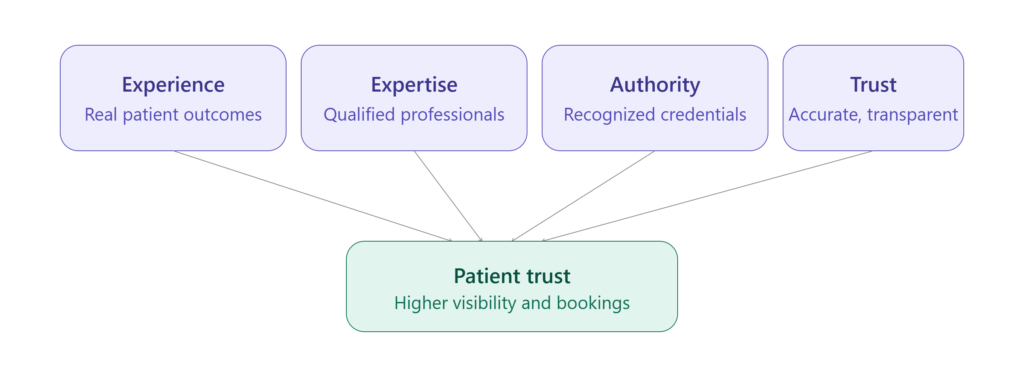
This matters more in healthcare than almost any other industry, since inaccurate medical information carries real consequences, and search platforms are designed to filter it out accordingly.
Providers who publish genuinely useful, medically accurate patient education content tend to build stronger long-term visibility than those relying purely on promotional pages. That includes explaining conditions, procedures, and what to expect from treatment, ideally written or reviewed by qualified professionals.
This kind of content also serves patients directly, reducing pre-appointment anxiety and helping them arrive better informed. Author credentials, clear sourcing, and periodic content review all reinforce the expertise and trustworthiness signals search systems look for.
Reputation Management Is No Longer Optional
Online reviews now function as a modern form of word-of-mouth, and for healthcare providers, they carry outsized weight. A handful of unaddressed negative reviews can outweigh years of strong in-person reputation if a prospective patient encounters them first.
Proactively managing healthcare online reputation has become a core part of maintaining trust at scale. That means responding professionally, encouraging satisfied patients to share their experience, and addressing concerns transparently.
Digital Marketing Supports Better Patient Outcomes, Not Just More Bookings
It’s worth noting that digital marketing in healthcare isn’t only about filling appointment slots.
Clear online information helps patients choose the right type of care instead of defaulting to emergency rooms for non-urgent issues. Appointment reminders and follow-up communication, often run through digital channels, improve treatment adherence. Accessible patient education content helps patients understand their conditions well enough to make informed decisions alongside their providers.
Viewed this way, a strong digital presence isn’t just a growth channel for a healthcare business, it’s part of delivering better care.
What This Means Going Forward
As more patients turn to search engines and AI tools as their first stop for health-related questions, providers who invest in accurate, well-structured, patient-focused digital content will be the ones patients actually find, and trust enough to choose.
Healthcare providers treating their digital presence as a core part of patient care, rather than an afterthought, are the ones best positioned for the years ahead.
Frequently Asked Questions
Why is digital marketing important for hospitals and clinics specifically? Because most patients now research providers online before booking, a clinic’s digital presence directly influences whether it gets found, trusted, and chosen over competitors.
What’s the most important digital marketing channel for healthcare providers? Local search visibility tends to matter most, since most healthcare searches are location-specific and high-intent, but it works best alongside a trustworthy website and active reputation management.
Is content marketing effective in healthcare? Yes, when done responsibly. Accurate, expert-reviewed patient education content builds long-term trust and search visibility, while also genuinely helping patients understand their own health decisions.
How does online reputation affect a healthcare provider’s growth? Reviews and ratings strongly influence patient decision-making, often more than traditional advertising, making consistent reputation management essential for sustained growth.
Final Thought
Digital marketing in healthcare isn’t a side project anymore it’s become part of how care actually gets delivered. A patient who finds accurate information easily, reads genuine reviews, and reaches a provider through a site that works properly is already having a better experience before they’ve even walked in the door. Providers who treat their online presence with the same care they bring to patient care itself are the ones patients will keep choosing.
Techbound works with healthcare providers on exactly this kind of digital presence: local search visibility, patient focused content, and reputation management built around actual patient trust.