


The Search Console Performance report is a powerful tool to analyze organic search traffic, but finding the exact data you need can take more time than you’d like.
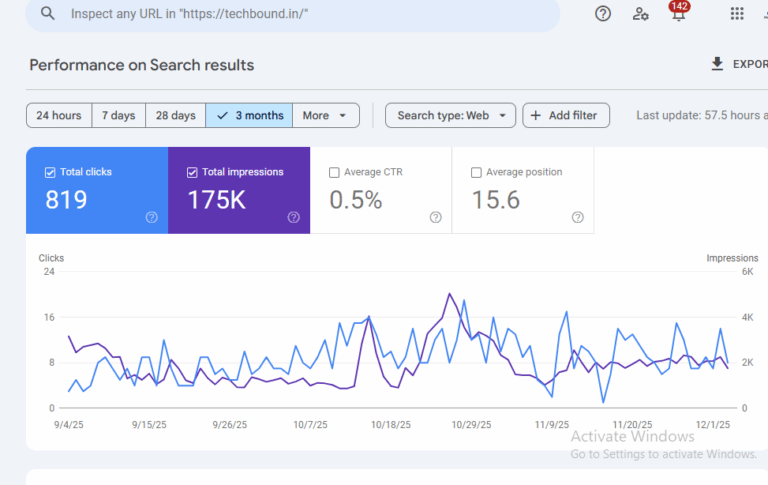
Today, we’re excited to announce an experimental feature in the Performance report designed to reduce the effort it takes for you to select, filter, and compare your data: AI-powered configuration.
Powered by AI, this feature lets you describe the analysis you want to see in natural language. Your inputs are then transformed into the appropriate filters and settings, instantly configuring the report for you.
The AI-powered configuration feature is designed to streamline your analysis by handling three key elements for you:
- Applying filters: Narrow down data by query, page, country, device, search appearance, or date range.
- Configuring comparisons: Set up complex comparisons (like custom date ranges) without manual setup.
- Selecting metrics: Choose which of the four available metrics—Clicks, Impressions, Average CTR, and Average Position—to display based on your question.
How the AI-Powered configuration works
Selecting metrics:
Choose which of the four available metrics—Clicks, Impressions, Average CTR, and Average Position—to display based on your question.
Applying filters:
Narrow down data by query, page, country, device, search appearance, or date range.
Configuring comparisons:
Set up complex comparisons (like custom date ranges) without manual setup.
Customize your performance data with AI
The AI-powered configuration tool is an experimental feature that uses AI to customize your Performance report (Search) by requesting the data you’d like to see. Instead of manually applying filters, comparisons, and selecting metrics, you can ask the assistant to configure the report for you.
How to customize your report
- Click the filter icon in the Performance report header to open the tool in the side panel.
- Type your request into the prompt field. The tool will then suggest the corresponding filters, comparisons, and metric settings. You must then confirm the suggestion to apply those settings to your report.
Each user is currently limited to 20 requests per day.
Rollout and Realistic Expectations
Google is rolling out this feature gradually and selectively, initially enabling it for a small group of websites. Most users won’t see it yet—but the company plans to expand access over time.
It’s important to note the current boundaries:
Scope:
The tool works only with the standard Search Performance report. It does not support Discover, News, or other report types
Accuracy:
While the AI is smart, it’s not infallible. It may occasionally misread your intent—so always double-check the applied settings before concluding.
Functionality:
This is purely a configuration assistant. It won’t sort your data tables, export reports, or answer analytical questions like “Why did traffic drop?”
Still, this innovation could unlock hidden insights you might have missed using traditional filters. By lowering the barrier to complex queries, it empowers marketers, SEOs, and site owners to experiment more freely—testing hypotheses like “How did our CTR change for voice search queries after our structured data update?” in seconds, not minutes.
When the feature becomes available to you, play with it actively. Ask sharp, specific questions. Test edge cases. The more you explore, the more value you’ll extract—not just from the AI, but from your own data.
Conclusion
Google’s new AI-powered configuration feature in Search Console is a true game-changer—especially for time-strapped SEO professionals and website owners. Instead of wrestling with intricate filters and manual report setups, users can now simply ask a question in plain, natural language and instantly receive the relevant performance data. This shift dramatically reduces the technical overhead traditionally associated with data analysis, allowing users to spend less time configuring reports and more time interpreting actionable insights. Although still in its early, experimental phase, this capability offers a compelling glimpse into the future of SEO tools: one where intuitive, conversational interfaces make powerful analytics accessible to everyone. The message is clear—just ask the right question, and the right data appears. Indeed, these are exciting times for anyone invested in search performance and digital visibility.