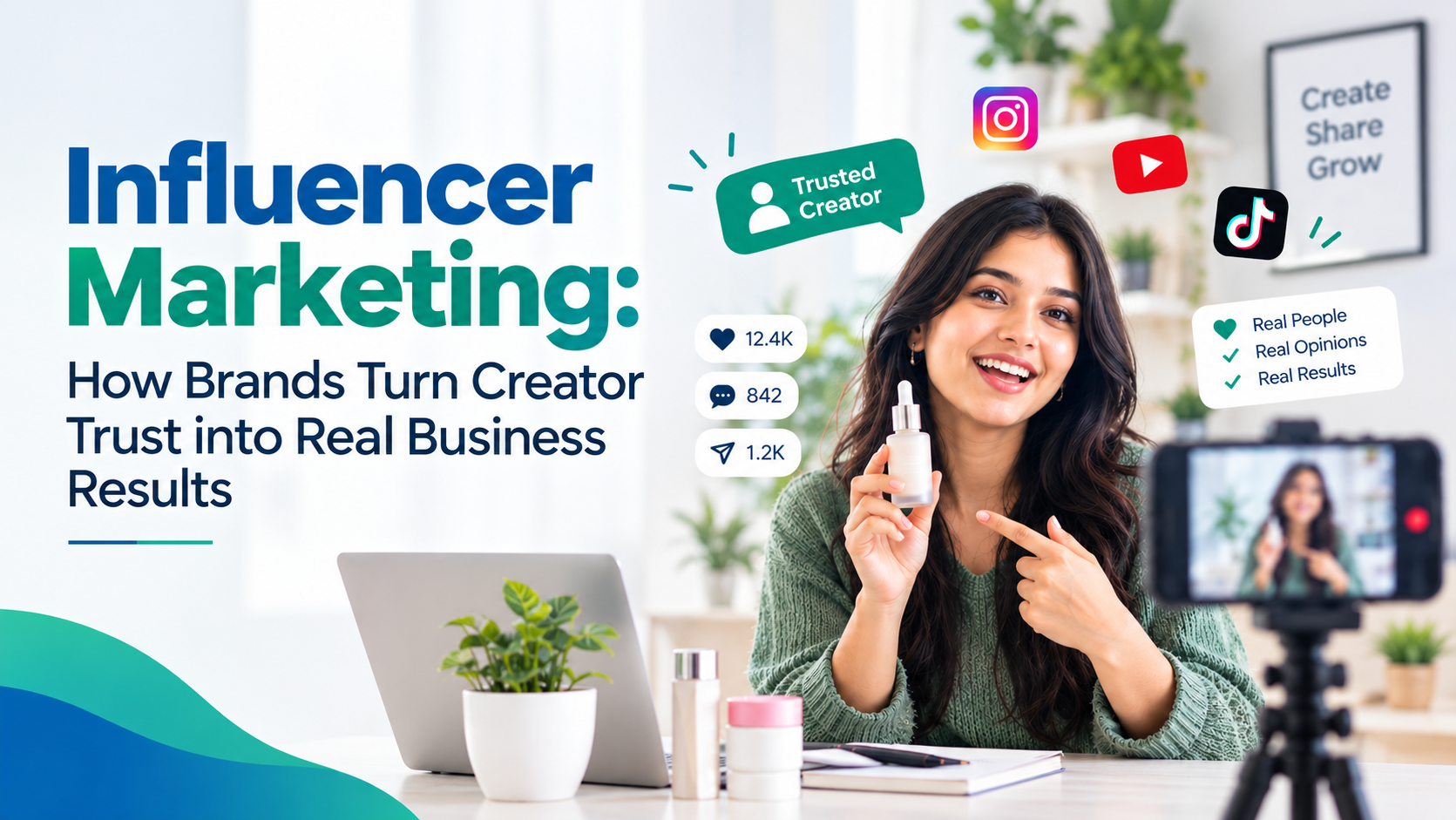
Think back to the last thing you bought because someone online recommended it. It probably wasn’t a banner ad that did the convincing. It was a person you follow, mentioning almost casually that a product had worked for them.
That small moment is the whole idea behind influencer marketing. It’s also why it’s so easy to get wrong. Brands hear “creators work” and rush in, then wonder why a pile of posts produced nothing. So here’s how it actually works, which creators fit which goals, and how to measure a campaign without fooling yourself.
What Is Influencer Marketing?
Influencer marketing is a form of social media marketing where a brand partners with a creator to promote a product, service or message to that creator’s audience. The creator tells it in their own voice, on their own channel, and people listen because they already trust them.
Here’s what sets it apart from a regular ad: who’s talking. In an ad, the brand speaks about itself. In a collaboration, someone the audience chose to follow speaks for you. That trust is the real thing you’re paying for, which is why the wrong creator can cost you money even when the post looks great. If you’re still getting comfortable with the wider channel, our social media marketing guide shows where creator content fits alongside organic and paid posts.
Types of Influencers and When to Use Each
Creators are usually sorted by follower count. Fair enough, but we’ve found the quality of the audience tells you more than the size of it.
Nano and Micro Creators
Nano creators typically have under 10,000 followers, and micro creators sit between 10,000 and 100,000. Their followers often know them personally, or follow them for one narrow interest, so a recommendation feels like advice from a friend. If you run a restaurant, clinic, boutique or coaching centre in one city, this is usually the most cost-effective place to start.
Macro Creators and Celebrities
These creators reach hundreds of thousands, sometimes millions. They make sense for launches and big awareness pushes. The catch is higher fees and thinner engagement per follower, so it’s harder to say which sale came from which post.
Subject Experts
A doctor, architect, chartered accountant or trainer with a loyal following can carry more weight than a general lifestyle creator. When trust is the biggest hurdle to buying, an expert’s opinion often does more than raw reach ever could.
How to Plan an Influencer Marketing Campaign
A good plan doesn’t have to be complicated. It just has to be specific.
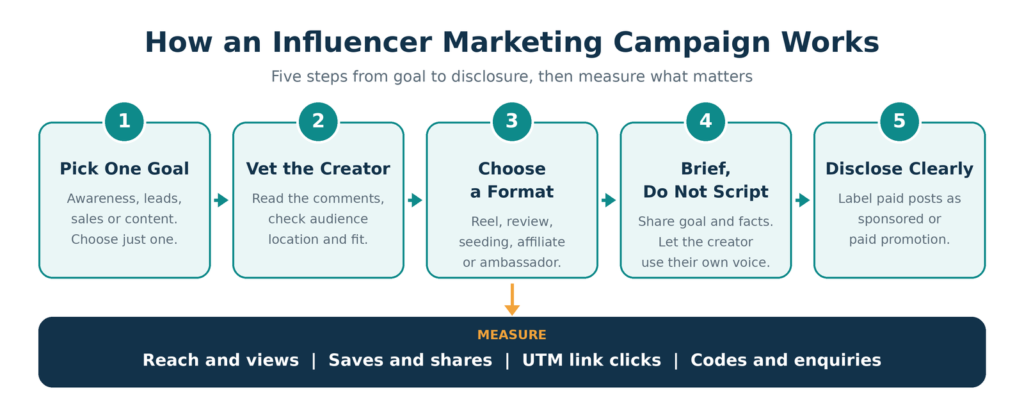
Step 1: Pick One Goal
Is the campaign for awareness, leads, sales or content? Choose one. That single decision shapes which creator you approach, what you ask them to make and which numbers you’ll look at afterwards. Campaigns that chase all four usually end up proving none.
Step 2: Vet the Creator Properly
Don’t stop at the profile. Open the comments and actually read them. Are people having real conversations, or is it a wall of fire emojis? Check where the audience lives, whether the creator promoted a competitor last month, and whether engagement holds steady or jumps around. A creator with 15,000 relevant followers can easily beat one with 300,000 scattered ones.
Step 3: Choose the Right Format
You have plenty of options: sponsored reels, product seeding, honest reviews, event coverage, affiliate links or a long-term ambassador deal. For a first campaign, a small paid collaboration or a commission-based arrangement keeps the risk low while you find out what works.
Step 4: Brief, Do Not Script
Share the goal, the main message, any facts that must be accurate and the legal basics. Then step back. Audiences can spot a read-out script within seconds, and they scroll straight past it.
Step 5: Disclose Clearly
Disclosure protects the brand and the creator. In India, the Department of Consumer Affairs’ Endorsement Know-Hows guidelines ask influencers to label paid or barter promotions in simple, clear terms such as “advertisement”, “sponsored”, “collaboration” or “paid promotion”. A visible label works. A tag buried under twenty hashtags doesn’t.
How to Measure Influencer Marketing Results
Likes are easy to count and just as easy to misread. Go back to the goal you set in step one and track what matches it.
- Awareness: reach, impressions, video views and profile visits
- Engagement: saves, shares, comments and average watch time
- Traffic: clicks tracked through UTM links in Google Analytics, read alongside your wider website traffic numbers
- Conversions: unique discount codes, dedicated landing pages or enquiry form submissions
One small habit pays off every time. Once the post is live, ask the creator for screenshots of their native analytics. Saves, shares and audience location say far more than a public like count.
Influencer Marketing and Search Visibility
Creator content does more than bring social reach. When a creator says your brand name in a video, caption or review, those brand mentions make people more likely to remember you and search for you by name later. And because more people now look up reviews and demos on social platforms before they open a search engine, creator content also feeds into social search.
Common Influencer Marketing Mistakes
A few patterns show up again and again when campaigns underperform:
- Choosing creators purely by follower count
- Expecting a single post to trigger an overnight sales spike
- Skipping a written agreement on deliverables, deadlines and content usage rights
- Ignoring audience location, so a campaign for a Trivandrum shop ends up in front of viewers in another country
Frequently Asked Questions
What is influencer marketing in simple words?
It’s when a brand partners with a trusted creator so that the creator’s followers hear about a product or service through posts, reels, videos or stories.
How much does influencer marketing cost?
It depends on the creator’s reach, platform, content format and usage rights. Nano and micro creators are usually far more affordable than celebrities, and some are happy to work on product exchange or commission.
Is influencer marketing suitable for small businesses?
Yes, as long as the creator’s audience matches your customers. Local businesses often get the best results from micro creators in their own city or industry.
Which platform is best for influencer marketing?
Instagram and YouTube suit most consumer brands, while LinkedIn works better for B2B. The right platform is simply wherever your buyers already spend their time.
How can I spot fake followers?
Watch for sudden follower jumps, repetitive comments, very low engagement compared with audience size, and followers concentrated in countries unrelated to the creator’s market.
Planning Your First Campaign
Influencer marketing rewards brands that stay patient, specific and honest. Choose the right creators, set one clear goal, disclose properly and measure what matters. If you’d like help planning social campaigns that connect to real enquiries, our team at Techbound, a digital marketing agency in Trivandrum, is happy to help.