For years, ChatGPT was simply a tool people used to get answers, draft emails, or brainstorm ideas. No ads, no sponsored content, just a clean conversation. That changed this month. OpenAI has officially rolled out ChatGPT Ads in India, opening a self-serve advertising platform to businesses of every size, and it arrives right as brands are gearing up for the festive shopping season.
If you run a business in Kerala or anywhere else in India and you’re wondering whether this is a channel worth your attention, here’s what actually happened, how it works, and how to think about it without getting swept up in the hype.
What Exactly Launched in India
OpenAI has opened ChatGPT Ads to logged-in adult users on the Free and Go tiers in India, with the Go plan priced at roughly ₹399 a month. From September 4, 2026, any business, not just large enterprises, can access a self-serve ads manager and start a campaign with a daily budget as low as ₹725. WPP and Omnicom are OpenAI’s first agency partners for the India launch, and more than 50 brands were reportedly ready to go live with campaigns within the first week.
Subscribers on the Plus, Pro, Business, Enterprise and Education tiers won’t see any ads at all. OpenAI has kept those experiences ad-free, at least for now, which tells you something about how it’s positioning this: ads subsidise free access, not the paid product.
How ChatGPT Ads Actually Work
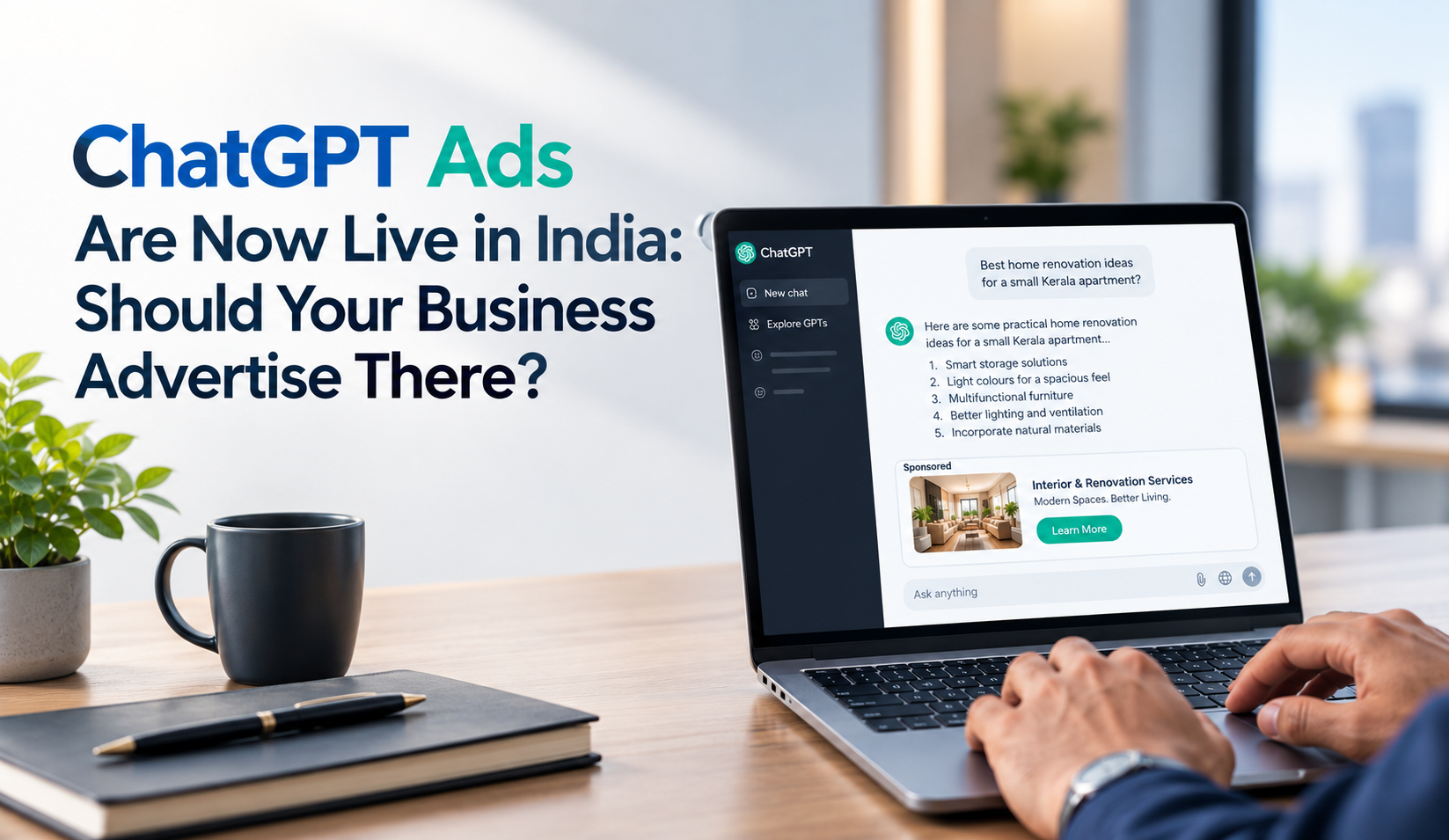
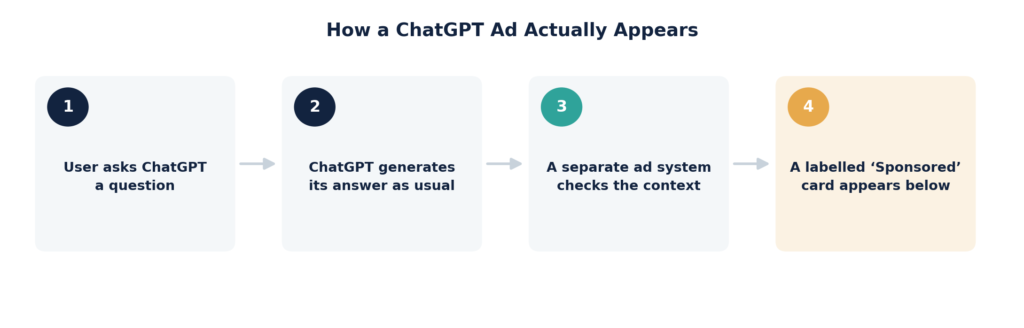
This isn’t display advertising or the kind of retargeting you’re used to on Meta or the open web. ChatGPT Ads show up as a sponsored card underneath a chat response, clearly labelled so it’s obvious the content is paid and separate from what the AI actually generated. There’s no banner interrupting the conversation and no ad woven into the answer itself.
Targeting works differently too. Instead of matching keywords the way Google Search does, ChatGPT reads the context of the conversation. A person typing “affordable home renovation ideas for a small Kerala apartment” is giving away far more intent than someone typing a two-word Google search, and that richer context is what advertisers are bidding against. Advertisers can also add context hints at the ad group level, essentially topics or scenarios where their product is relevant, though OpenAI is clear these are guidance signals, not guaranteed exact-match placements.
On privacy, OpenAI says advertisers never see a user’s actual chat history, memories, or personal details. What they get instead is aggregate performance data: impressions, clicks, and similar metrics. Ads are also kept away from sensitive categories like health, mental health, and political topics, and they’re not shown to anyone the platform identifies as being under 18. If you want the technical detail straight from the source, OpenAI’s own ads in ChatGPT overview breaks down the ad format, delivery, and measurement in full.
What It Costs to Advertise on ChatGPT
The entry point is low by design. Daily budgets start around ₹725, and the platform supports both cost-per-thousand-impressions (CPM) buying for reach-focused campaigns and cost-per-click (CPC) buying for campaigns built around clicks and conversions. That flexibility matters for a small or mid-sized business testing a new channel, since you’re not committing to a large media spend just to see whether it works for your category.
That said, low minimums don’t automatically mean low competition. As more advertisers pile in during the festive quarter, costs in popular categories will likely rise the same way they do on any platform during peak season.
How This Compares to Google Ads and Meta Ads
If you’re already running Google Ads or Meta campaigns, ChatGPT Ads won’t replace them, but it does something neither fully does on its own. Google Search still wins on raw search volume and buying intent. Meta still wins on visual storytelling and audience-based targeting. ChatGPT sits in between: it captures people at the exact moment they’re comparing options, asking follow-up questions, and working through a decision in natural language, which is a different kind of intent signal than a search query or a scroll-stopping video.
For local businesses, the honest way to think about it is as a smaller, earlier-stage test channel rather than a core budget line right now. It’s new enough that best practices are still being written in real time, and the ad formats themselves are likely to expand over the coming months as OpenAI learns what actually converts.
Should Your Business Advertise on ChatGPT Right Now?
There’s a real case for testing early. Competition is lower today than it will be a year from now, the entry cost is small, and being one of the first brands a customer sees inside a ChatGPT answer, rather than the fiftieth one bidding on the same Google keyword, has its own value. Early movers on a new ad platform have historically enjoyed better performance simply because fewer businesses understood the opportunity yet.
There’s also a reasonable case for waiting. If your customers are largely local, offline-influenced buyers, such as someone searching for a renovation contractor, a gold buyer, or a real estate agent in their own city, your existing Google Business Profile, local SEO, and Meta presence may still be doing more of the heavy lifting than ChatGPT will for a while yet. The right move usually isn’t “jump in everywhere at once,” it’s understanding where your specific customers are actually spending their attention before allocating a budget.
Frequently Asked Questions
Do ChatGPT Ads affect the actual AI-generated answer? No. OpenAI has been explicit that the model’s response and the ad shown beneath it come from separate systems. The ad doesn’t influence what ChatGPT tells the user.
Can small businesses actually afford to advertise on ChatGPT? Yes. With daily budgets starting around ₹725 and self-serve access, this isn’t limited to large brands with agency budgets. That said, “affordable” doesn’t automatically mean “effective” for every business category.
Will ChatGPT Ads replace Google Ads or Meta Ads? Not currently. It’s a complementary channel that captures a different kind of intent, particularly for businesses whose customers research decisions conversationally before buying
Where to Start
If you’re curious whether ChatGPT Ads make sense for your business, the honest answer is that it depends on your category, your customer’s buying behaviour, and how your existing channels are already performing. That’s exactly the kind of assessment a digital marketing agency in Trivandrum like Techbound can help you work through, figuring out where a new channel like this actually fits into your existing marketing mix, rather than adding noise to it.